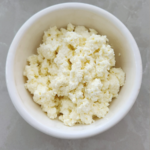
Homemade Ricotta with Vinegar
Creamy, fresh ricotta made with milk, vinegar, and salt—simple and perfect for toast, pasta, or desserts.
Equipment
- Large pot (a heavy-bottomed pot helps prevent scorching.)
- Colander or fine-mesh strainer
- Large bowl (for catching the whey.)
- Slotted spoon or wooden spoon
- Cheesecloth or clean tea towel
- Kitchen thermometer (optional but helpful)
Ingredients
- 1 gallon whole milk (raw or pasteurized, just not ultra-pasteurized)
- 1/4 cup vinegar (white or ACV)
- 1 tsp salt
Instructions
- Pour your milk into a large stockpot and place it over medium high heat. Slowly heat it to 190-195°F, stirring occasionally to prevent the bottom from scorching. A kitchen thermometer is helpful here, but you can also gauge it when the milk starts to steam without boiling.
- Take off the pot from the heat and then gently stir in the vinegar for a minute or so. Watch as the milk begins to separate into curds and whey. Let it sit for 5-10 minutes to allow the curds to form fully.
- Carefully pour the curds into a cheesecloth-lined colander or mesh strainer and set it over a large bowl to catch the whey. Allow the whey to drain for about 15-30 minutes or longer if you prefer a firmer/drier ricotta.
- Sprinkle in the salt and give the ricotta a gentle stir to incorporate. Transfer your fresh ricotta to a container, cover it, and store it in the refrigerator for up to a week. If you’ve made more than you can use, you can freeze it for later use.
Notes
You should get at least 4 cups (32 oz.) of ricotta from this recipe.
- Avoid Ultra-Pasteurized Milk” Ultra-pasteurized milk doesn’t curdle well due to the high heat it’s been processed with. Stick to fresh, raw, or regularly pasteurized milk for the best results.
- Use the excess whey to make another batch of ricotta
- Pour the whey back into the pot and reheat over medium-high heat, stirring occasionally to prevent sticking.
- Warm it to 190-195°F. Look for fluffy white curds separating from the yellowish whey. Avoid boiling.
- Drain through cheesecloth in a colander set over a bowl.
- Let it drain for up to an hour. For firmer ricotta, tie the cheesecloth and hang it to drip. Store in the fridge for up to a week or freeze for later use.
- Experiment with Different Acids: Swap vinegar for 1 teaspoon of citric acid or 5 teaspoons of fresh lemon juice. Each acid creates slightly different flavors and textures.
- Use Room Temperature Milk: Starting with milk that’s already at room temperature saves time and helps curds form more easily.
- Add Herbs or Spices: Stir in garlic powder, basil, oregano, or red pepper flakes for a savory twist. For something sweet, mix in honey and cinnamon.