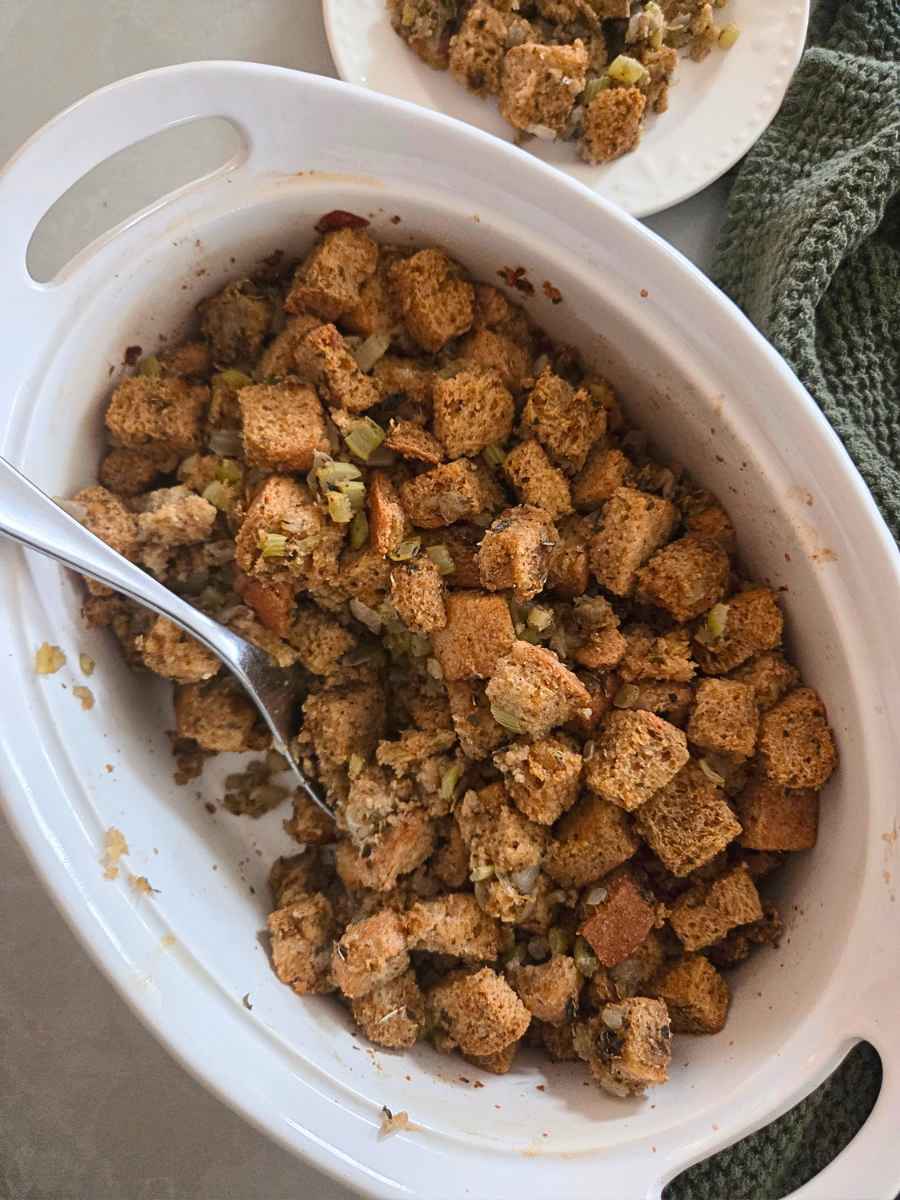
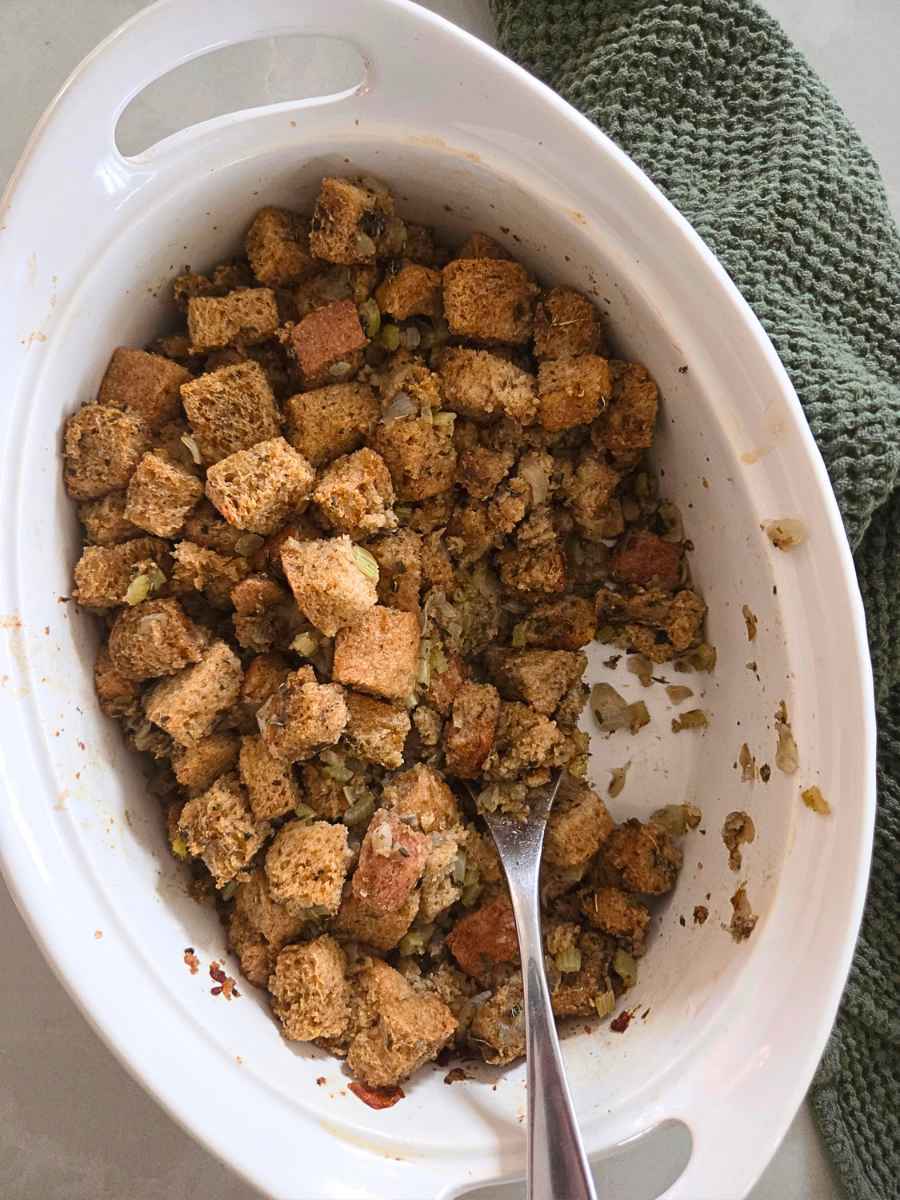
This Fresh Milled Flour Stuffing is made with homemade sandwich bread, buttery sautéed onions and celery, and classic herbs. It’s soft and moist on the inside with a lightly golden top, just like a good old-fashioned stuffing should be!
This post may contain affiliate links, please read our disclosure policy for details.
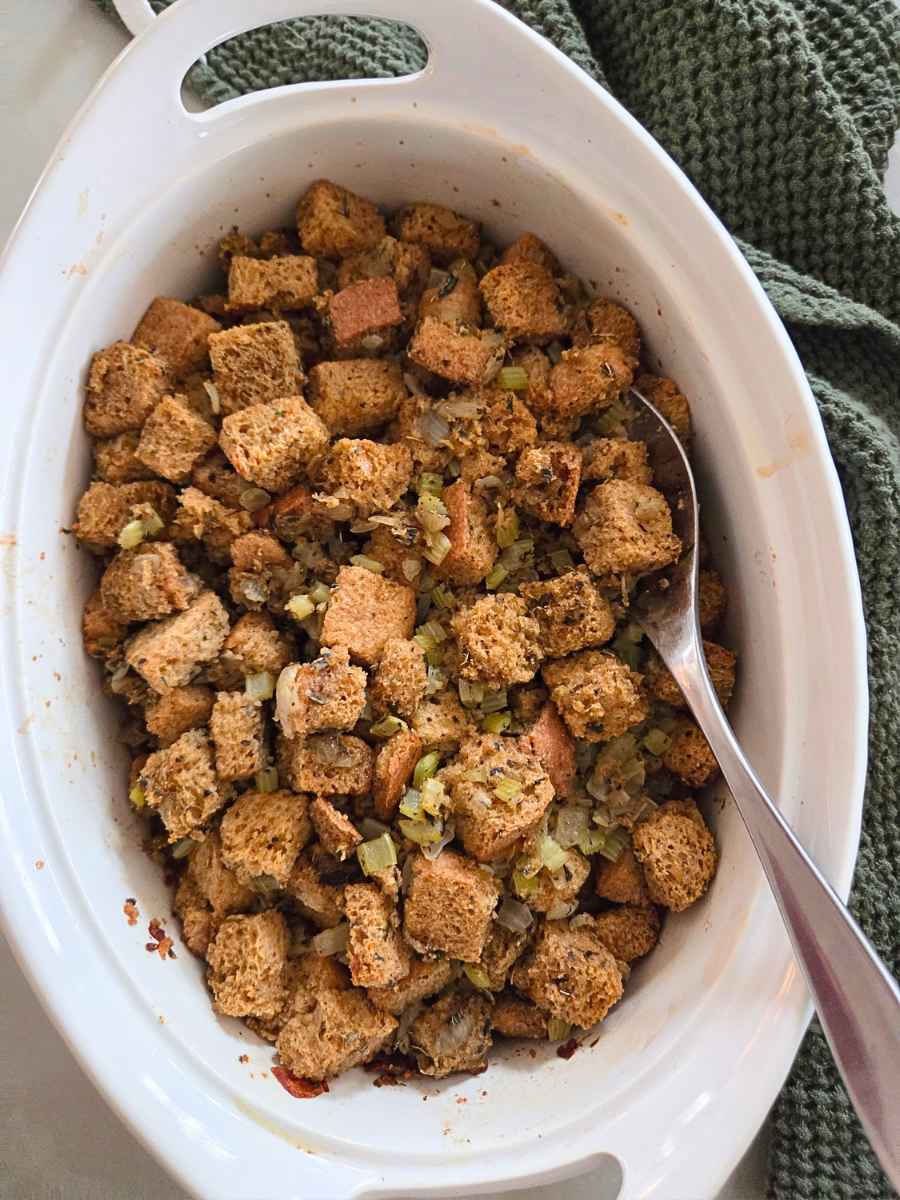
This recipe is based on my mom’s classic stuffing that I’ve been making for years using my own homemade bread. It’s become a staple at our Thanksgiving dinner, and now that I use my Fresh Milled Flour Sandwich Bread to make it, I think it’s even better! Plus, we’re getting all the benefits of freshly milled whole grains in a dish we’ve always loved.
Why You’ll Love This Fresh Milled Flour Stuffing Recipe
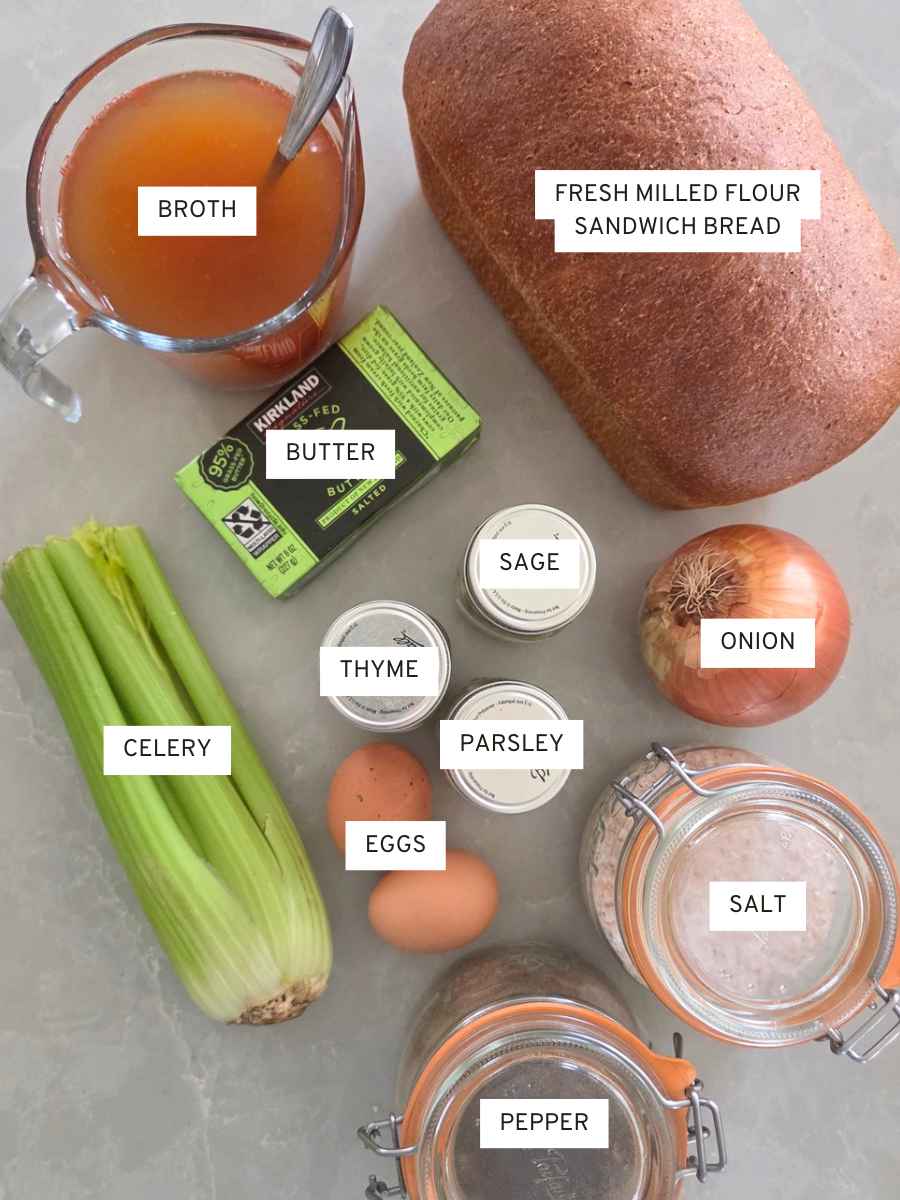
Key Ingredients & Substitutions
What Kind of Bread Is Best for Stuffing?
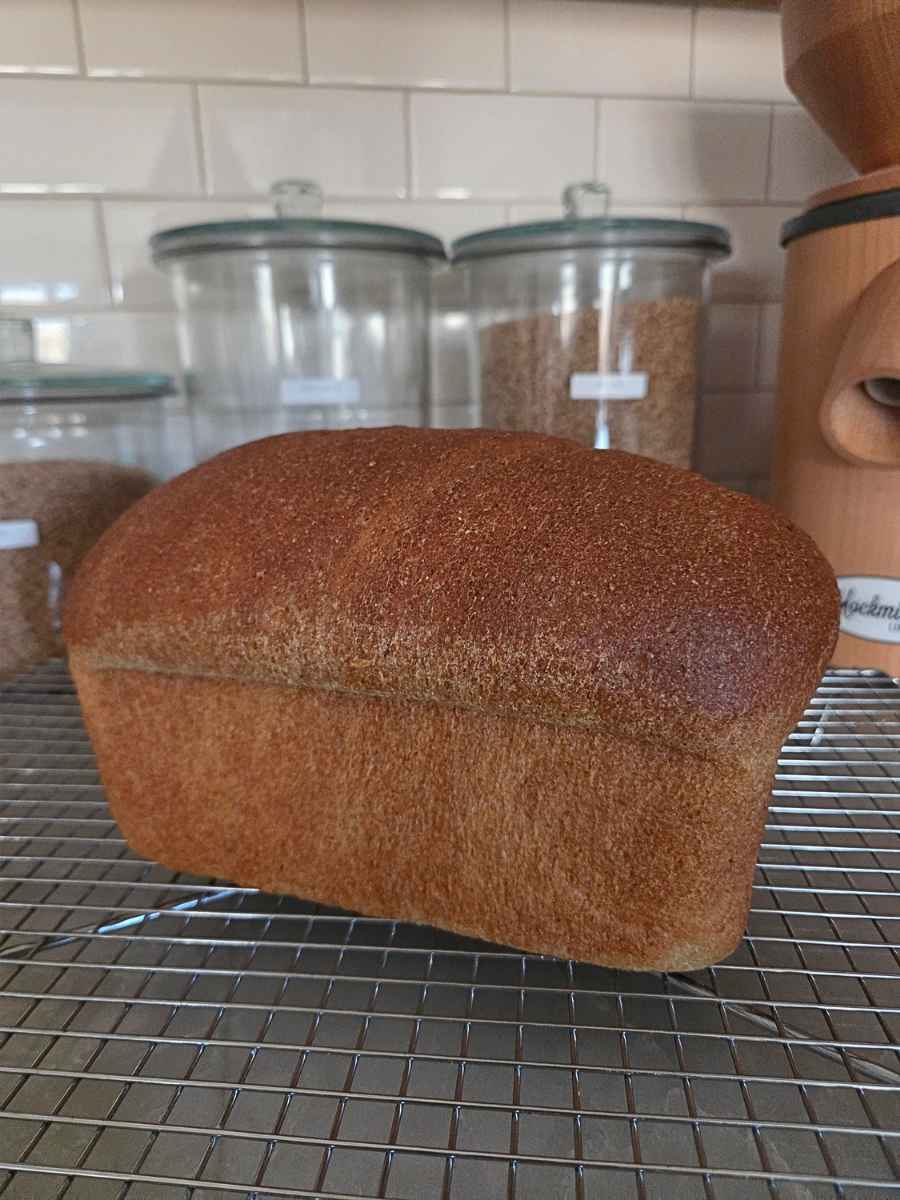
I use my Fresh Milled Flour Sandwich Bread for this recipe, but you can use your favorite homemade bread. The most important thing is that the bread is thoroughly dried before making the stuffing.
If you already have plain, unseasoned homemade croutons, those may work too. Just keep in mind that you may need to adjust the amount of broth depending on how dry they are.
How to Dry Bread for Stuffing
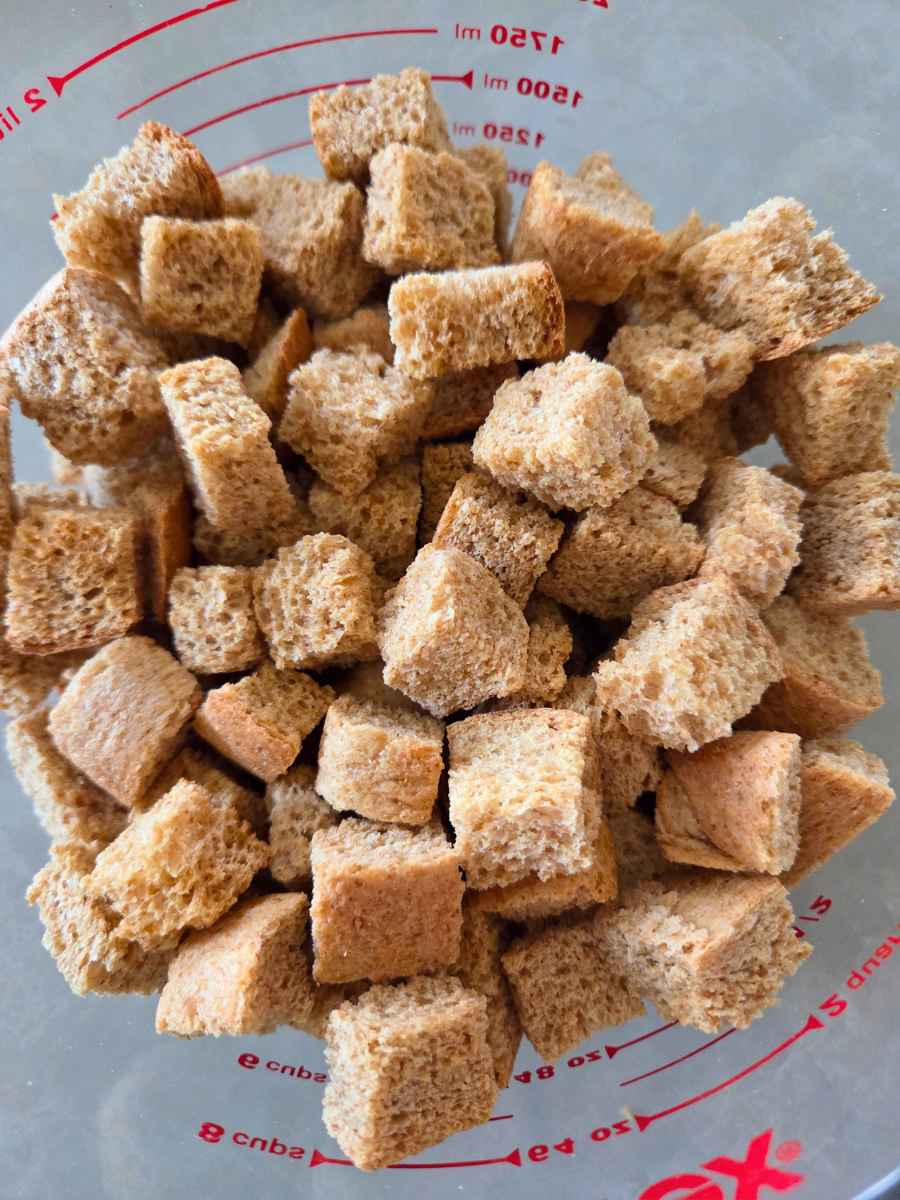
I recommend drying the bread cubes in the oven to make sure they’re dry enough to absorb the broth without becoming mushy.
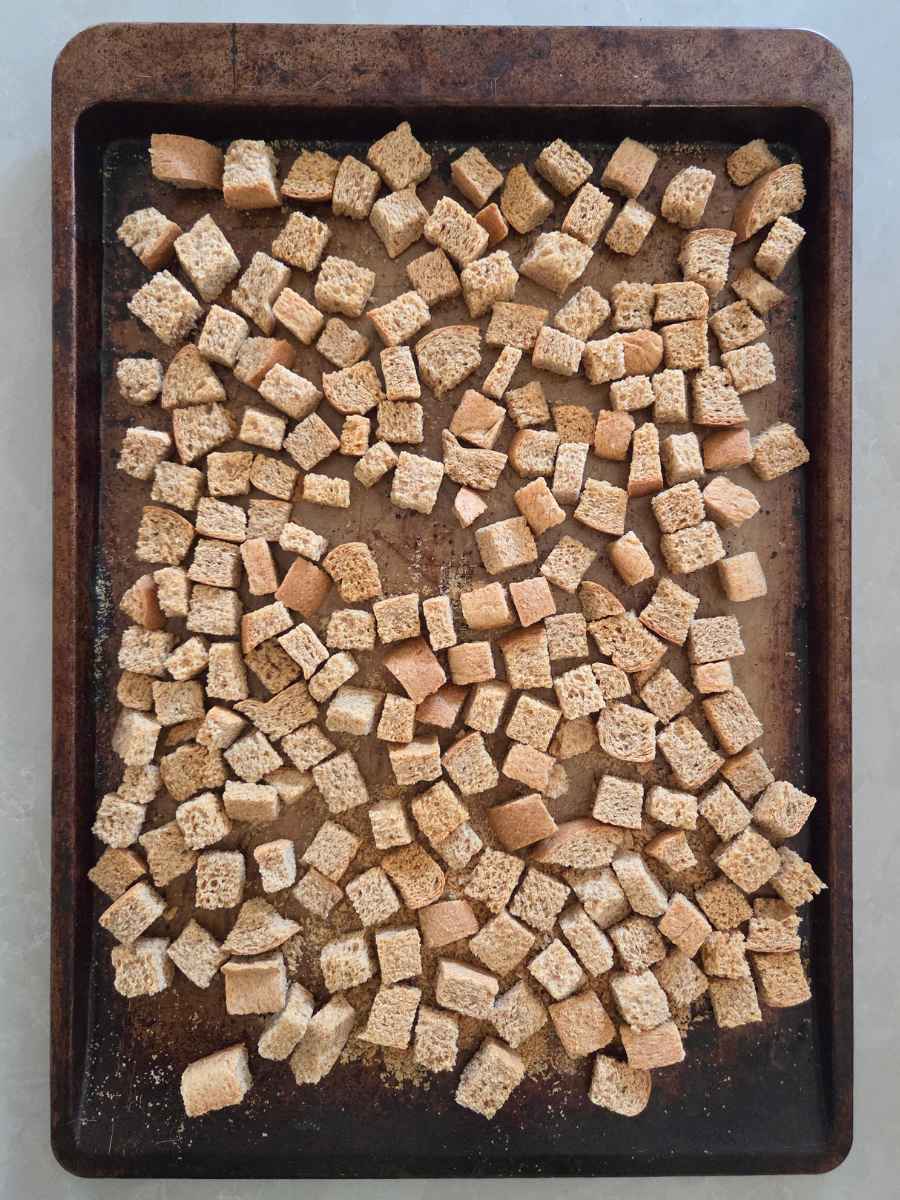
Cut the bread into ½-inch cubes and spread them evenly on a large baking sheet. Bake at 300°F for 20–30 minutes, stirring every 10 minutes, until the bread feels completely dry and firm. You don’t want the bread to brown, just dry out.
When I made this stuffing, I cut my bread into cubes the night before and left them on a baking sheet in the oven (turned off) overnight. They were still pretty soft the next morning, so I baked them at 300°F for another 20 minutes, and they turned out perfect!
Tips for Making the Best Fresh Milled Flour Stuffing
Weigh your bread before drying. If you’re using my Fresh Milled Flour Sandwich Bread recipe, keep in mind that one loaf weighs almost 2 pounds. You’ll only need 1 pound of bread for this stuffing recipe, or approximately half a loaf. The bread will lose some weight as it dries.
Don’t skip drying the bread. Fresh homemade bread is soft and holds a lot of moisture. Make sure your bread cubes are dry and firm before making the stuffing so they can absorb the broth without becoming mushy.
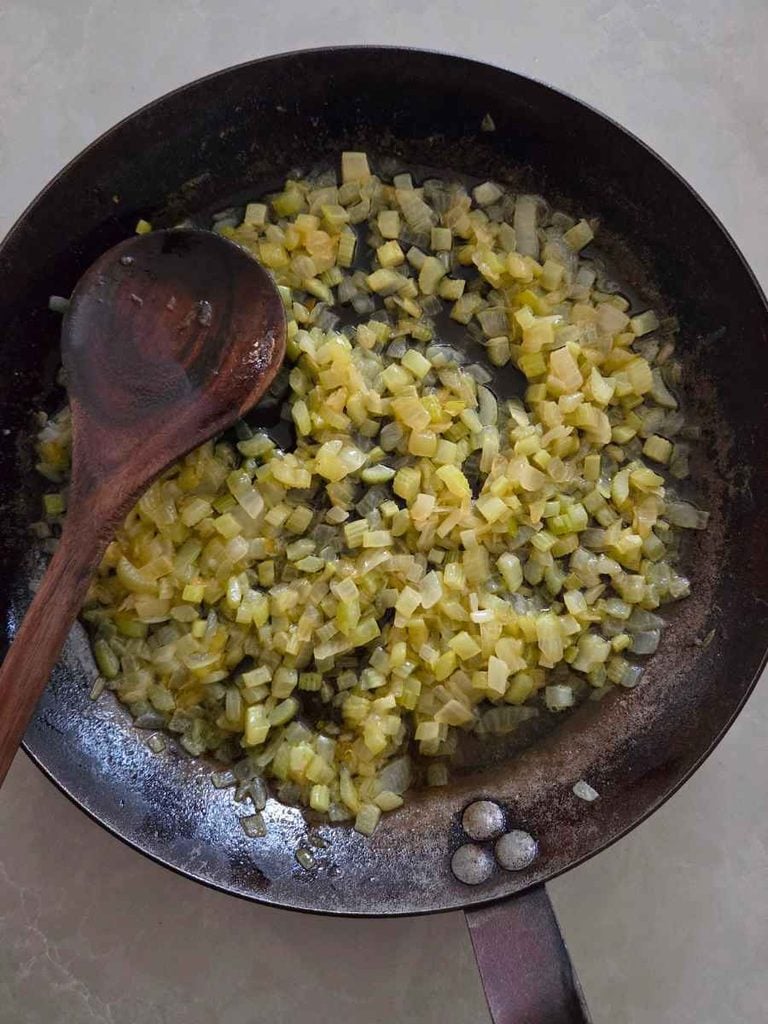
Cook the vegetables until tender. I like my onions and celery nice and soft, without any crunch in the finished stuffing.
Adjust the moisture if needed. I find that 2 cups of broth is plenty, but if you prefer a softer, moister stuffing, you can add another ¼–½ cup before baking.
Use the right baking dish. A 2½–3-quart baking dish or 9×13-inch pan works well. The stuffing will be thinner in a 9×13-inch pan, so check for doneness a few minutes early.
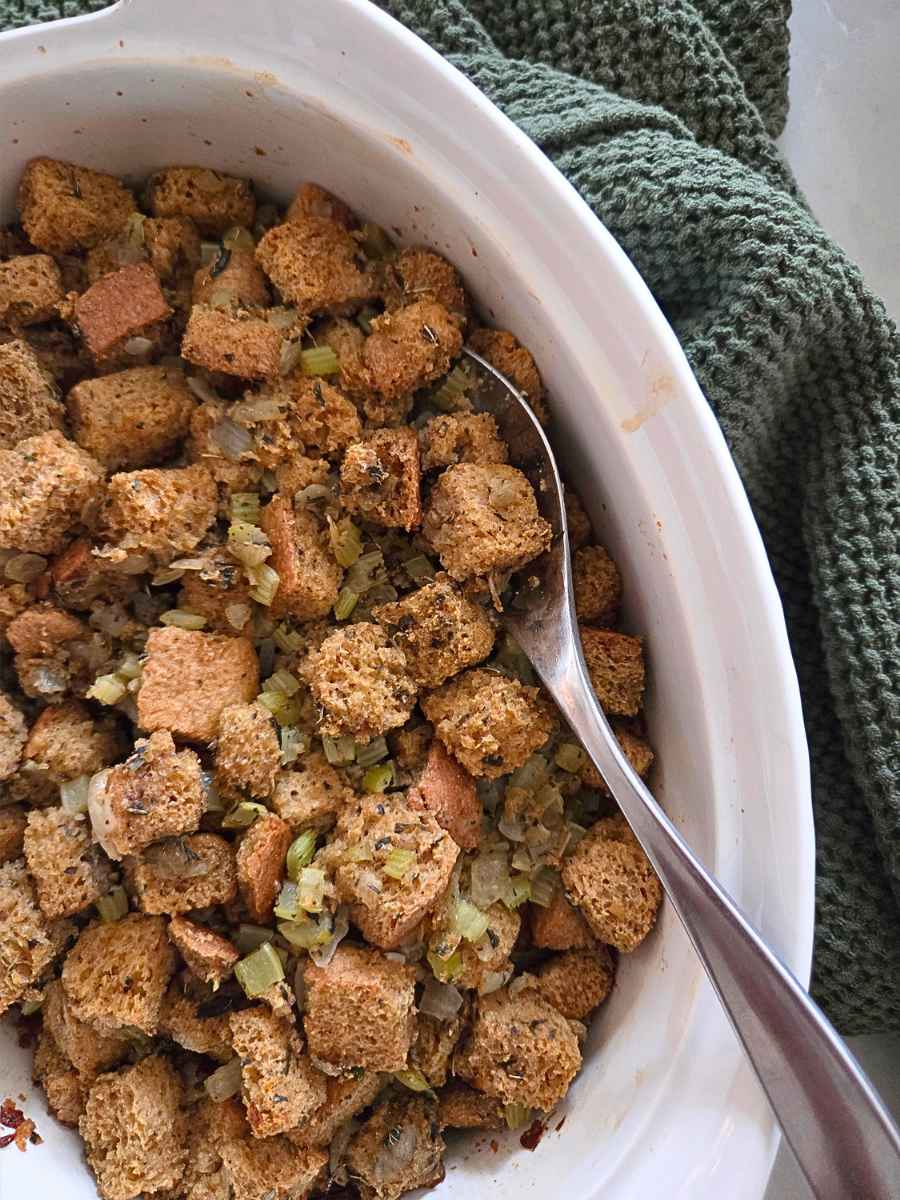
Bake covered first. This helps the stuffing stay moist while it cooks. Remove the cover for the last 10 minutes to give the top a lightly golden finish.
How to Make Fresh Milled Flour Stuffing
Before You Begin: If you haven’t already made your bread, prepare my Fresh Milled Flour Sandwich Bread ahead of time and let it cool completely. You’ll need 1 pound of bread.
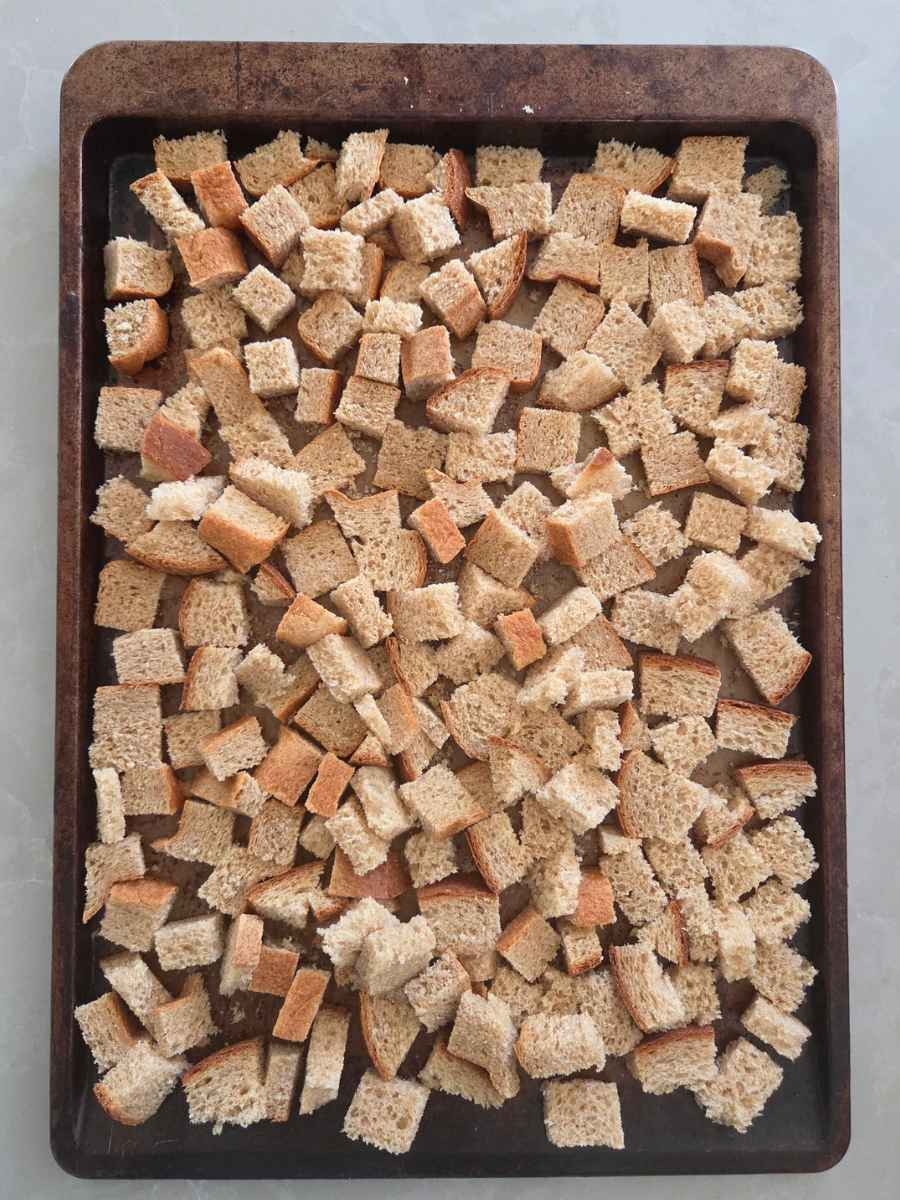
Weigh out 1 pound of fresh milled flour sandwich bread before drying, then cut it into ½-inch cubes. Spread the cubes evenly on a large baking sheet and bake at 300°F for 20–30 minutes, stirring every 10 minutes, until completely dry and firm but not browned.
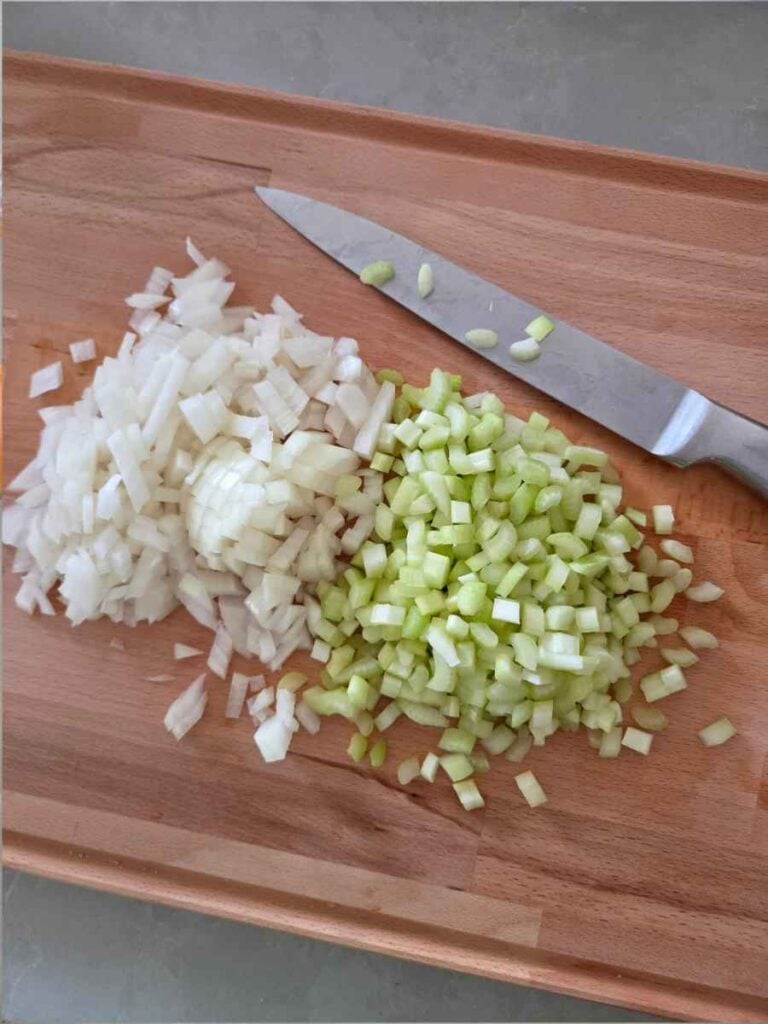
While the bread is drying, melt the butter in a large skillet over medium heat. Add the diced onion and celery and sauté for 10–15 minutes, stirring occasionally, until very soft and tender.
Preheat the oven to 350°F. In a large mixing bowl, whisk the eggs together. Add the dried bread cubes and gently toss to coat.
Add the sautéed vegetables, scraping all the butter from the skillet into the bowl, along with the thyme, sage, parsley, salt, and black pepper. Toss everything together until evenly combined.
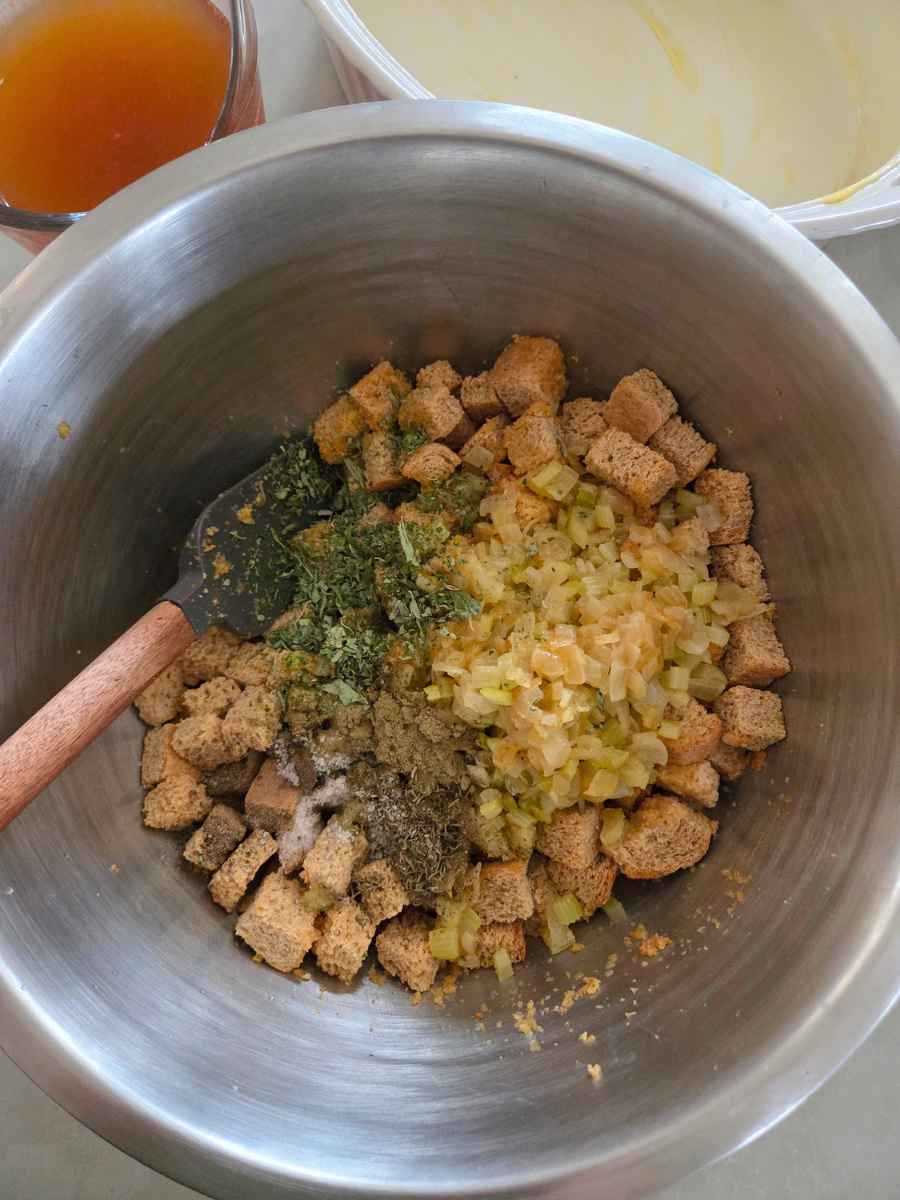
Pour 2 cups of broth over the bread mixture and gently stir until the bread cubes are evenly moistened.
Transfer the stuffing mixture to a greased 2½–3-quart baking dish or a 9×13-inch baking dish. Spread evenly without packing it down too tightly. Cover with a lid or aluminum foil.
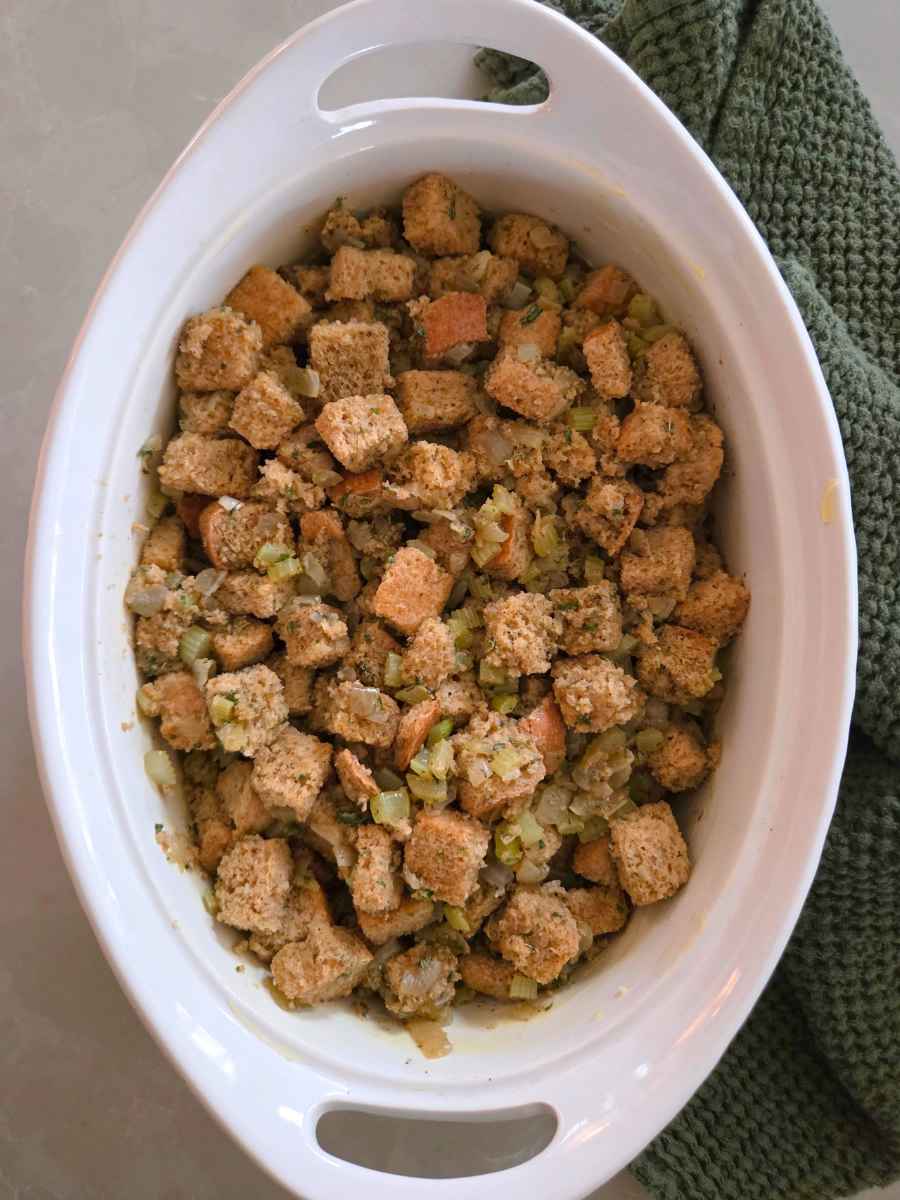
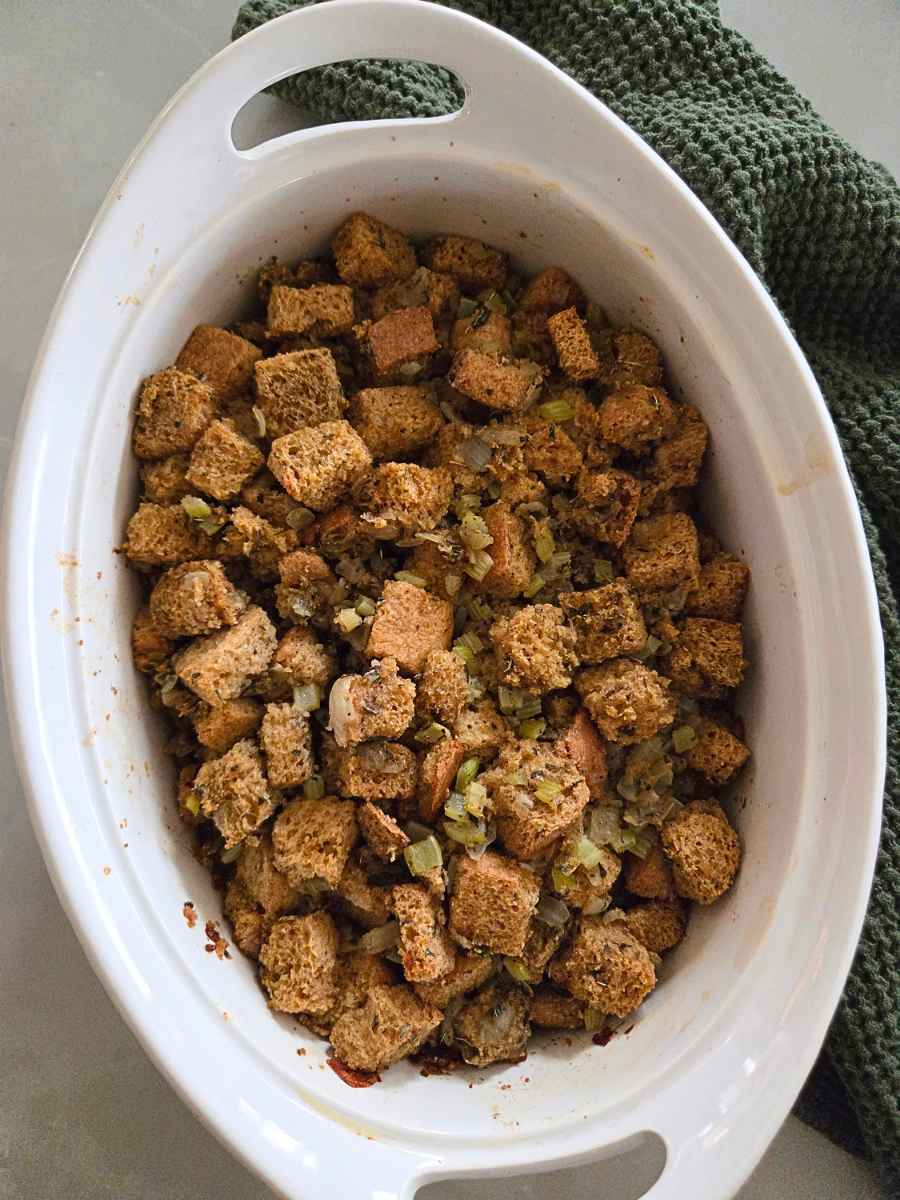
Bake at covered at 350°F for 35 minutes. Remove the cover and bake for another 10 minutes, or until the top is lightly golden. Serve warm.
How to Store and Reheat Fresh Milled Flour Stuffing
Refrigerator: Store leftover stuffing in an airtight container in the refrigerator for up to 3–4 days.
Freezer: Once completely cooled, transfer the stuffing to a freezer-safe container and freeze for up to 2–3 months.
Reheating: Cover the stuffing and place it in a 350°F oven until warmed through. Add a splash of broth if it seems a little dry.
Frequently Asked Questions
More Fresh Milled Flour Thanksgiving Recipes
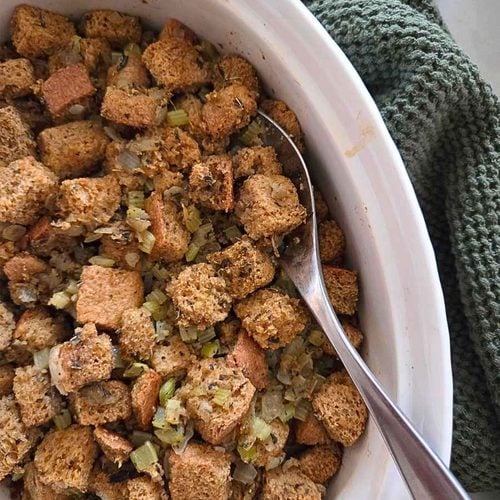
Fresh Milled Flour Stuffing
Equipment
- 2½–3 quart baking dish or 9×13-inch baking dish
- Large skillet
- Large mixing bowl
- Large baking sheet to dry the bread cubes
Ingredients
- 1 lb fresh milled flour sandwich bread cut into ½-inch cubes (weighed before drying)
- ½ cup butter (113 g)
- 1 large onion, diced
- 1 –1½ cups diced celery (about 4-6 ribs)
- 2 large eggs
- 2 cups vegetable or chicken broth
- 1 tablespoon dried parsley
- 1 teaspoon ground sage
- 1 teaspoon dried thyme
- 1 teaspoon fine sea salt
- ½ teaspoon black pepper
Instructions
- Before You Begin: If you haven’t already made your bread, prepare my Fresh Milled Flour Sandwich Bread ahead of time and let it cool completely. You’ll need 1 pound of bread.
- Weigh out 1 pound of fresh milled flour sandwich bread before drying, then cut it into ½-inch cubes. Spread the cubes evenly on a large baking sheet and bake at 300°F for 20–30 minutes, stirring every 10 minutes, until completely dry and firm but not browned.
- While the bread is drying, melt the butter in a large skillet over medium heat. Add the diced onion and celery and sauté for 10–15 minutes, stirring occasionally, until very soft and tender.
- Preheat the oven to 350°F. In a large mixing bowl, whisk the eggs together. Add the dried bread cubes and gently toss to coat.
- Add the sautéed vegetables, scraping all the butter from the skillet into the bowl, along with the thyme, sage, parsley, salt, and black pepper. Toss everything together until evenly combined.
- Pour 2 cups of broth over the bread mixture and gently stir until the bread cubes are evenly moistened.
- Transfer the stuffing mixture to a greased 2.5 qt baking dish (or 3 qt) or a 9×13-inch baking dish. Spread evenly without packing it down too tightly. Cover with a lid or aluminum foil.
- Bake covered at 350°F for 35 minutes. Remove the cover and bake for another 10 minutes, or until the top is lightly golden. Serve warm.
Notes
- Bread: My Fresh Milled Flour Sandwich Bread weighs almost 2 pounds per loaf, so you’ll only need about half. Weigh out 1 lb. before drying, since the bread loses moisture and weight as it dries. Once dried, the bread cubes should weigh around 11 oz. and measure about 8 cups. These amounts may vary slightly depending on how dry your bread is.
- Fresh Herbs: Substitute 1 tablespoon each of chopped fresh thyme and sage, and 3 tablespoons chopped fresh parsley for the dried herbs. Adjust to taste.
- Extra Moist Stuffing: I find that 2 cups of broth is plenty, but if you prefer a softer, moister stuffing, you can add an additional ¼–½ cup of broth before baking.
- Rubbed Sage: If using rubbed sage instead of ground sage, start with about 2 teaspoons and adjust to taste.
- Baking Dish: A 9×13-inch baking dish will spread the stuffing a little thinner, so check for doneness a few minutes early.
- Servings: Makes approximately 8–10 servings, depending on portion size.
- Storage: Refrigerate leftovers in an airtight container for 3–4 days or freeze for up to 2–3 months.
- Reheating: Cover and reheat in a 350°F oven until heated through to 165°F. Add a splash of broth if needed to keep it moist.
Did you make this recipe?
I’d love to hear how it turned out! Leave a comment below or share a photo with me on Facebook!